Executive Summary
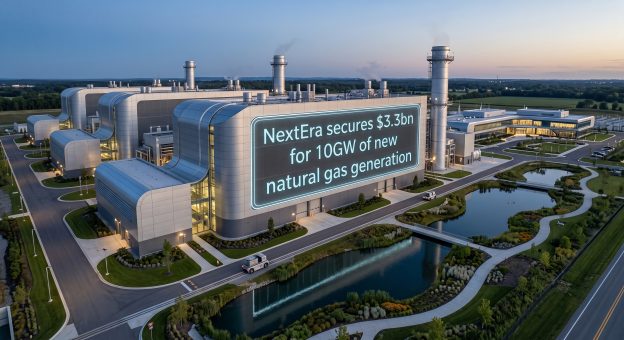
NextEra Energy has secured $3.3 billion in state financing to develop 10 GW of new natural gas generation capacity across two projects in Texas and Pennsylvania, explicitly targeting growing data center power demand. Specifically, the funding will support the $17 billion South Mon project in Pennsylvania, which is expected to add 4.3GW of gas-fired capacity in the Mon Valley region.
The Players
NextEra Energy, one of the largest IPPs in North America, is leading the development. The agreements were signed with the US Department of Commerce and the Government of Japan. They are part of the $550 billion investment commitment from Japan to the US announced back in March.
The Numbers
- Total Financing: $3.3 billion in state funding
- Capacity: 10 GW of new natural gas generation
- Markets: Texas and Pennsylvania
- Timeline: Projects are expected to initially come online by late 2028, with full operation slated for 2032.
So What?
This deal matters for two reasons:
- 10 GW is hyperscaler-scale capacity. This isn’t speculative merchant generation — NextEra is building to meet identified load. The financing structure suggests offtake agreements are either signed or imminent, likely with Microsoft, Meta, Amazon, or Google, all of whom have significant data center footprints in both states.
- Gas is winning the near-term dispatchable race. While nuclear gets headlines and renewables dominate ESG narratives, natural gas is what’s actually getting financed and built at scale right now. For power developers and investors, this is where the capital is flowing.
What Should You Do With This Information?
If you’re an investor: dispatchable generation tied to hyperscaler offtake is the highest-conviction trade in power markets today. NextEra’s ability to secure $3.3B in state backing validates the risk profile and return potential.
If you’re a data center operator or hyperscaler: this is what your competitors are doing to lock in power. If you’re not already negotiating similar structures, you’re at risk of being priced out or delayed.
Source: Data Center Dynamics, August 18, 2026