Executive Summary
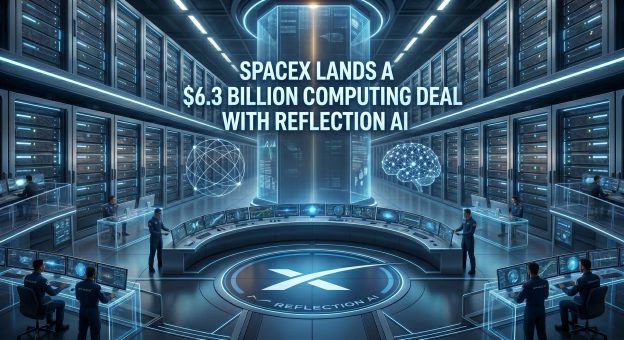
SpaceX has secured a $6.3 billion computing infrastructure deal with Reflection AI, marking a significant expansion beyond its core aerospace business into AI compute infrastructure. This transaction positions SpaceX as an emerging competitor to traditional hyperscalers in the AI infrastructure market, following its acquisition of xAI.
The Players
SpaceX, primarily known for satellite launch services and Starlink, has been quietly building AI compute capabilities since acquiring xAI. Reflection AI, the customer in this transaction, is securing massive compute capacity through this agreement. The deal structure suggests SpaceX is offering end-to-end infrastructure—not just colocation space, but integrated compute, power, and cooling solutions.
The Numbers
The $6.3 billion deal value puts this transaction in the upper tier of AI infrastructure commitments, comparable to some of the largest hyperscaler data center investments. The deal gives Reflection access to Nvidia GB300 chips at Colossus 2 in Memphis starting July 1 at $150 million per month.
So What: Implications for Power Developers and Investors
This deal fundamentally expands the addressable market for dispatchable generation developers. SpaceX entering AI infrastructure means:
- New offtaker class emerging: Beyond Microsoft, Google, Meta, and Amazon, we now have non-traditional players with aerospace-grade engineering capabilities and balance sheets entering the market. SpaceX has demonstrated ability to deploy capital at scale and operate complex physical infrastructure.
- Vertical integration accelerating: SpaceX’s manufacturing expertise in high-density thermal management (rocket engines operate under extreme thermal loads) translates directly to AI cooling challenges. They’re likely building integrated solutions that include behind-the-meter generation.
- Competition for power intensifying: If SpaceX is committing $6.3B to one customer, they’re securing power capacity somewhere. This likely means they’re either locking up utility capacity, developing their own generation, or both. Power developers should expect more competition for interconnection queue positions and PPAs in key markets.
- Deal structures evolving: SpaceX’s entry suggests customers are willing to work with non-traditional providers if they can deliver integrated solutions. This creates opportunities for power developers who can partner with emerging infrastructure players, not just the established hyperscalers.
Action Items for Market Participants
Power developers should: (1) Map SpaceX’s likely facility locations and assess local generation development opportunities, (2) Consider partnership structures with non-traditional infrastructure entrants who need power expertise, (3) Re-evaluate market size assumptions—the AI compute buyer universe just expanded significantly.
Investors should note: This validates the thesis that AI infrastructure demand extends well beyond the hyperscaler oligopoly. Capital deployment into dispatchable generation serving this expanded customer base becomes more defensible.
Source: StartupFortune, June 22, 2026